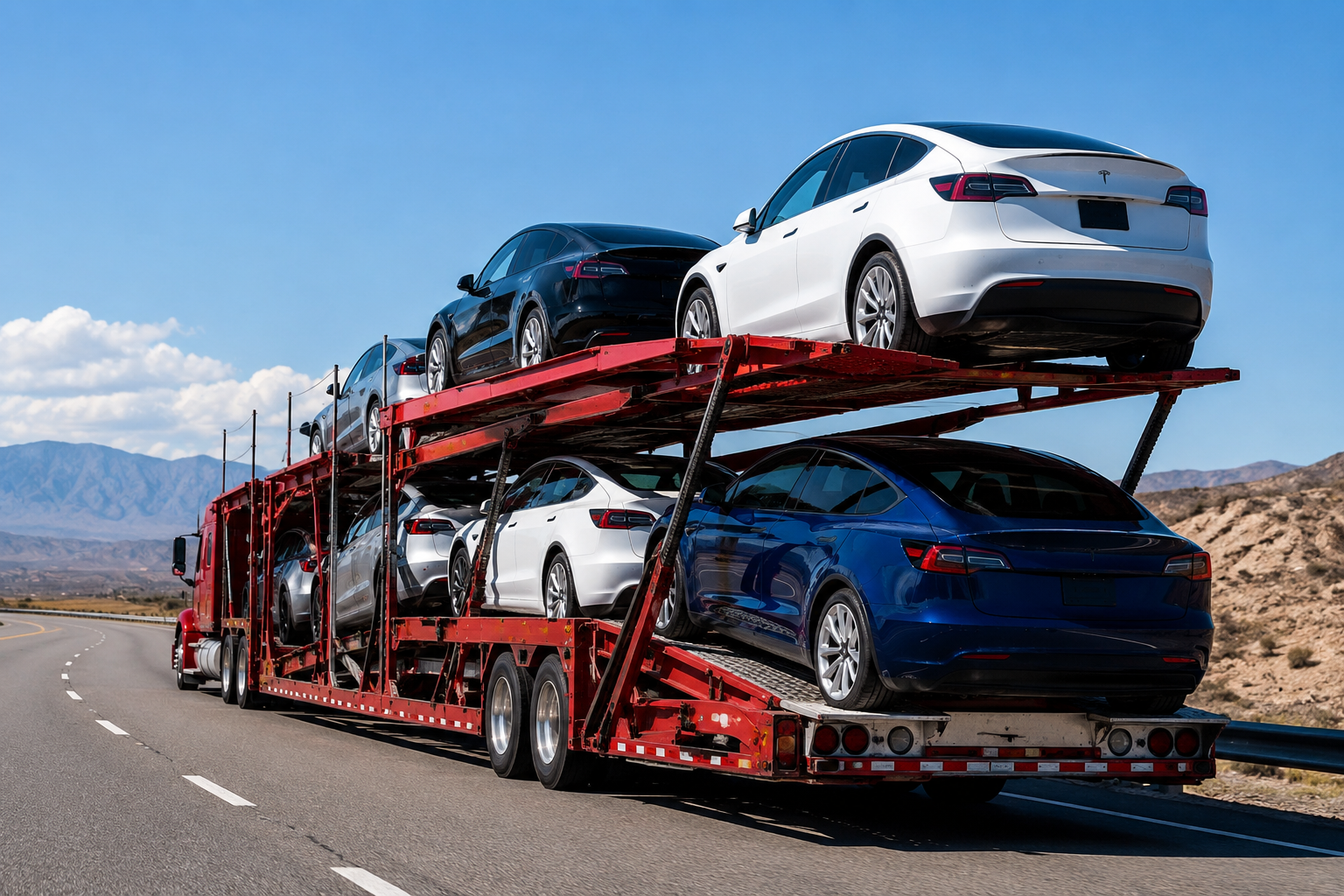
Everyday Cars, SUVs + Trucks
Open transportation is commonly used for vehicles that are regularly driven and where the customer is primarily focused on reliable transportation at a generally lower cost.
Compare Your Vehicle Shipping Options
Comparing open vs enclosed auto transport comes down to your vehicle, budget and transportation priorities. Both methods can move vehicles nationwide, but they offer different levels of carrier availability, covered transportation and overall cost.
A widely used transportation method for everyday cars, SUVs, pickup trucks and many other vehicles.
Explore Open Transport →
Covered transportation commonly selected for classic, collector, exotic, luxury and specialty vehicles.
Explore Enclosed Transport →The Short Answer
For many everyday vehicles, open transportation is the practical choice because open carrier capacity is more common and is generally more economical.
Enclosed transportation becomes more attractive when the vehicle is high-value, rare, collectible, exotic or when covered transportation is an important priority.
Open transportation is commonly used when the customer wants broad carrier availability and a generally lower transportation cost.
Enclosed transportation is commonly considered when the customer wants the vehicle transported inside a covered trailer.
There is no single transportation method that is best for every vehicle. This side-by-side comparison shows the primary differences between open and enclosed vehicle transportation.
Vehicle is transported on an open trailer.
Vehicle is transported inside an enclosed trailer.
Open transportation is generally the more economical of the two methods.
Enclosed carrier capacity is more specialized and typically costs more.
Open carriers make up a large portion of vehicle transportation equipment.
Enclosed capacity can be more limited depending on the route and timing.
Vehicles remain exposed to normal road and weather conditions during transportation.
The trailer surrounds the vehicle during transportation.
Cars, SUVs, pickup trucks, crossovers and many other standard vehicles.
Classic, exotic, luxury, collector and specialty vehicles are common candidates.
Well suited for customers prioritizing value and broad carrier availability.
Well suited when covered transportation is a major priority.
Price Difference
Open transportation generally costs less because open carrier capacity is more widely available. Enclosed transportation usually carries a premium because the equipment is more specialized and fewer vehicles may be transported at one time.
The exact difference varies by route, vehicle, distance, season, requested timing and available carrier capacity.
They show the typical relative cost relationship between open and enclosed transportation. They do not represent a fixed percentage or guaranteed price difference.
What Are You Shipping?
The vehicle itself often helps determine which transportation method makes the most sense.
Open transportation is commonly used for vehicles that are regularly driven and where the customer is primarily focused on reliable transportation at a generally lower cost.
Enclosed transportation is often considered for vehicles where covered transportation is especially important to the owner.
Understanding The Difference
Open transportation leaves the vehicle exposed to normal outside road and weather conditions while it is on the carrier.
Enclosed transportation places the vehicle inside a covered trailer. That physical enclosure is the main difference between the two methods.
Neither transportation method should be described as risk-free. Customers should still inspect and document the vehicle before pickup and again at delivery.
The vehicle remains visible and exposed to outside conditions while on the carrier.
Enclosed transportation surrounds the vehicle with the trailer structure.
Document the vehicle condition at pickup regardless of which transportation method you choose.
Review the vehicle when it arrives and compare its condition to the pickup documentation.
Simple Decision Guide
You do not need to overcomplicate the decision. Start with how the vehicle is used, what matters most to you and whether covered transportation is worth the added cost.
Compare My Options →If the vehicle is regularly exposed to normal road and weather conditions, open transportation may be the practical choice.
Covered transportation may be more attractive when shipping a rare, collector or specialty vehicle.
Open transportation is generally more economical and may provide broader carrier availability.
If keeping the vehicle inside a covered trailer is one of your highest priorities, enclosed transportation may be worth the additional cost.
Open equipment is generally more common, which can provide more transportation options depending on the route.
Owners of high-value and specialty vehicles frequently consider enclosed transportation because of the covered trailer environment.
Clear Up The Confusion
Open carriers transport a wide range of vehicles, including many newer and higher-value everyday vehicles. The transportation method is a personal choice based on priorities.
Not necessarily. The owner should decide whether covered transportation is worth the additional cost based on the vehicle and personal preferences.
No transportation method should be treated as risk-free. Vehicle inspection and documentation remain important with both methods.
Enclosed transportation generally costs more because the equipment and available carrier capacity are more specialized.
The vehicle is loaded onto an open carrier for transportation. Open refers to the style of trailer, not the vehicle being driven to the destination.
Neither method is automatically right for every shipment. The right choice depends on the vehicle, budget, transportation needs and owner preferences.
Request a quote using your exact year, make, model, pickup area and delivery area. American Auto Express can coordinate transportation based on your vehicle and preferred transport method.